Category: Thyroid Function

  • Thyroid Function: 5 Reasons Normal Labs Don’t Guarantee True Health

    Thyroid Function: 5 Reasons Normal Labs Don’t Guarantee True Health

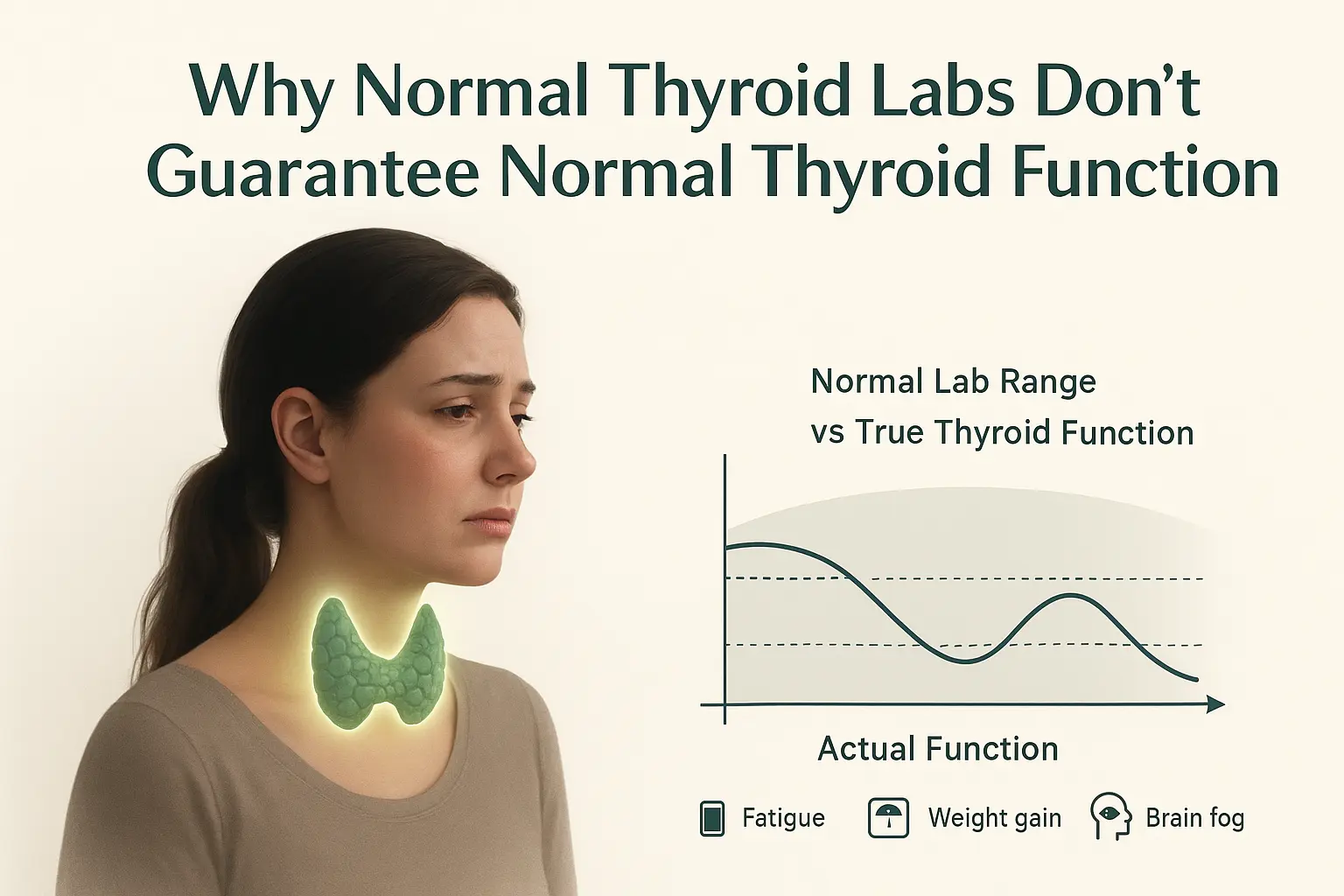
    Many women and men feel constantly fatigued, struggle with weight, or notice mood swings — yet routine thyroid labs often appear “normal.” This disconnect can be confusing and frustrating. Understanding how thyroid function interacts with hormones, metabolism, and lifestyle factors is key to recognizing subtle imbalances before they affect energy, mood, and overall well-being.

    How Thyroid Hormones Work

    The thyroid produces hormones that regulate metabolism, energy, and mood. While T4 is the main hormone released, it is inactive and must convert into the active form, T3, to influence your body effectively.

    • T4 → T3 conversion is critical for energy production and metabolic efficiency
    • T3 affects brain function, metabolism, and fatigue levels- literally everything in the body.
    • Conversion can be influenced by stress, diet, lifestyle habits, and many other factors like liver function, etc. 
    • The availability of T3 can be affected by the amount that is bound up by the binding globulins. Hence, measuring Free T3 is also needed.

    Even when labs measure TSH or T4 levels and appear “normal,” subtle dysfunction in T3 conversion or hormone utilization can lead to fatigue and other symptoms.


    Why Labs Might Look “Normal”

    Routine thyroid tests often focus on TSH or T4 alone, which can miss early or subtle dysfunction. Several factors can influence lab results:

    • Timing of the test (morning vs. afternoon)
    • Temporary stress or illness
    • Nutritional deficiencies
    • Minor metabolic disruptions that don’t appear on standard panels

    This is why some individuals feel symptoms even when tests suggest everything is fine.
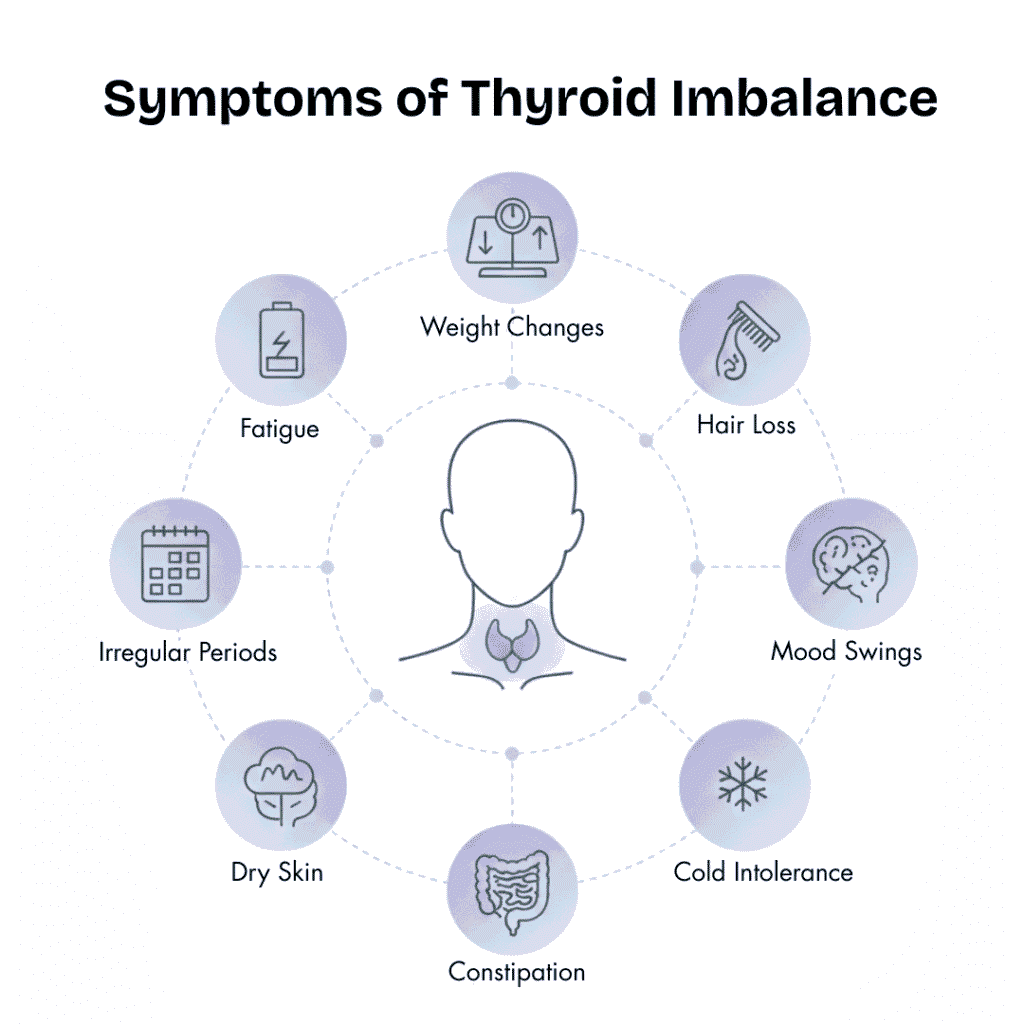
    Thyroid Function : Thyroid Imbalance symptoms

    Subtle Symptoms That Often Go Unnoticed

    Thyroid imbalance doesn’t always trigger obvious lab alerts. Early signs can include:

    • Persistent fatigue, especially after meals
    • Brain fog or difficulty concentrating
    • Afternoon energy slumps
    • Mood swings or irritability
    • Minor, unexplained weight fluctuations

    Even mild symptoms can indicate that your thyroid is not functioning optimally, despite normal lab values.

    Lifestyle & Functional Factors Influencing Thyroid

    Functional medicine emphasizes understanding root causes beyond standard labs. Some of the factors that can subtly impact thyroid hormone function are:

    • Stress: High cortisol levels can reduce T4 → T3 conversion
    • Nutrition: Deficiencies in selenium, iodine, or zinc can affect both conversion and  metabolism
    • Sleep disruption: Inconsistent sleep can impact hormone balance
    • Gut health & inflammation: Chronic issues may influence thyroid function indirectly

    Thyroid Hormones – Bound vs Free

    • Bound Hormones: Attached to proteins, inactive, measured in standard lab tests.
    • Free Hormones: Unbound, active, ready to fuel your cells.
    • Why it matters: Only free hormones regulate energy, metabolism, and mood. Even with normal labs, low free hormone levels can leave your body starved for thyroid activity.

    Key Nutrients That Support Healthy Thyroid Hormone Production
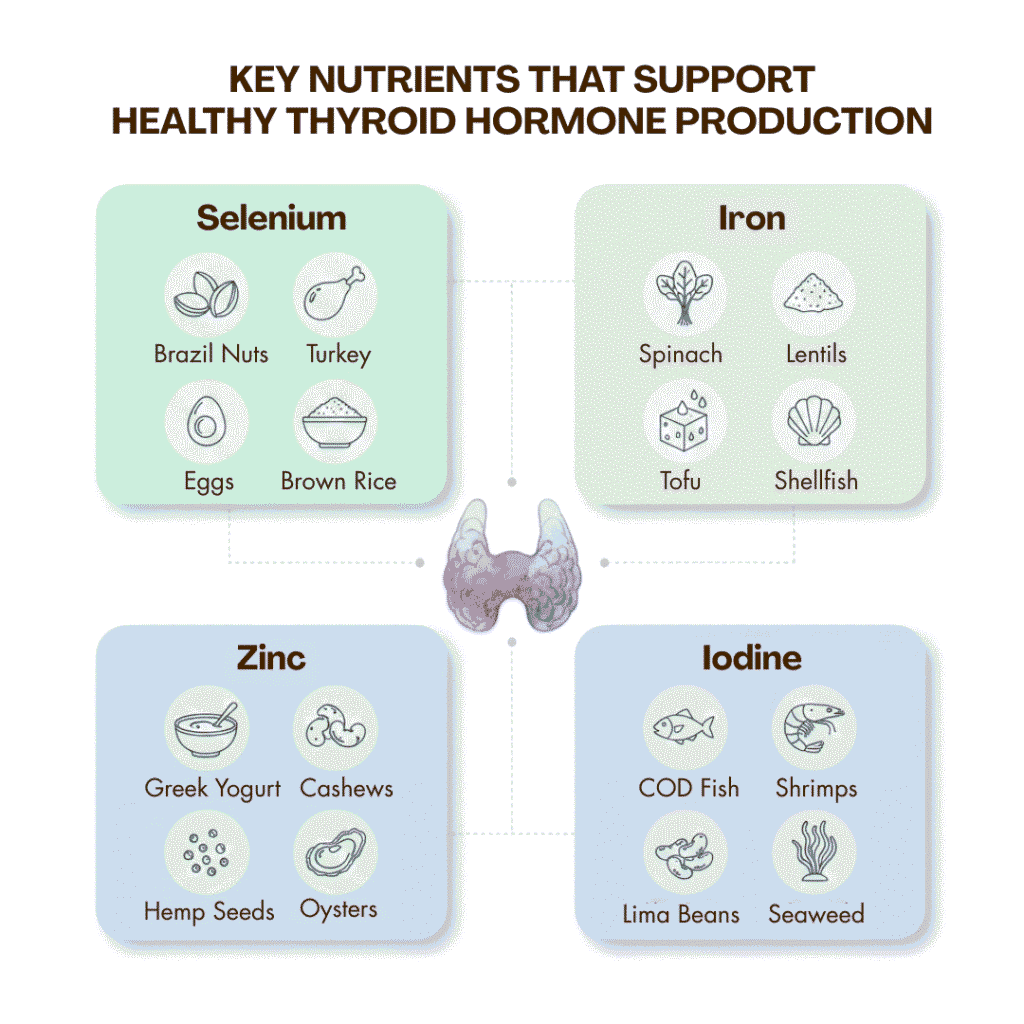
    Thyroid Function: Healthy diet

    The thyroid requires certain nutrients and vitamins to function optimally:

    • Minerals: Iron, Iodine, Tyrosine, Zinc, Selenium
    • Vitamins: E, B2, B3, B6, C, D
    • Why it matters: Deficiencies can slow hormone production, leading to fatigue, low energy, and sluggish metabolism.
    • Practical Tip: Include leafy greens, eggs, nuts, seeds, and seafood to naturally support thyroid health.

    Factors That Can Reduce Thyroid Hormone Production

    Certain conditions or exposures can decrease your thyroid’s hormone output:

    • Lifestyle & environmental factors: stress, infections, trauma, medications, radiation, fluoride, toxins
    • Health conditions: autoimmune diseases
    • Signs of reduced hormone production: fatigue, mood swings, unexplained weight changes

    T4 → T3 Conversion: How Your Thyroid Makes Hormones Active

    • The thyroid releases T4 (inactive), which must be converted into T3 (active) to fuel cells efficiently.
    • Supports Conversion: Selenium and Zinc
    • Blocks Conversion / Increases Reverse T3: Stress, trauma, low-calorie diets, inflammation, toxins, infections, liver/kidney issues, or certain medications

    Improving How Your Cells Respond to Thyroid Hormones

    Even if hormone levels are normal, cells must respond properly to them for energy and metabolism:

    • Supports Cellular Sensitivity: Vitamin A, Zinc, and regular exercise
    • Lifestyle Factors: Prioritize consistent sleep, a balanced diet, and stress management
    • Outcome: Ensures thyroid hormones reach your cells effectively, regulating energy, metabolism, and overall well-being

    Practical Steps to Support Thyroid Function

    Even without abnormal labs, small lifestyle adjustments can support optimal thyroid function:

    • Balanced diet: Include protein, fiber, and micronutrients to stabilize blood sugar and hormone function
    • Daily movement: Light resistance training or walking improves metabolism
    • Sleep hygiene: Prioritize 7–8 hours of consistent sleep
    • Stress management: Mindfulness, journaling, or breathing exercises help reduce cortisol
    • Monitor symptoms: Track energy patterns, mood, and cravings to notice subtle imbalances

    These actions support hormone balance and metabolic health, providing noticeable improvements over time.

    Conclusion

    Normal thyroid labs don’t always guarantee optimal thyroid function. Subtle disruptions in hormone conversion, lifestyle factors, and stress can affect energy, mood, and metabolism. Understanding these patterns empowers you to notice early signals and take actionable steps toward better hormone health.
    At Hormone Reset, we guide individuals to understand metabolic and hormone patterns using functional approaches — emphasizing lifestyle, nutrition, and energy optimization without relying solely on routine lab tests.

    References:

    https://pmc.ncbi.nlm.nih.gov/articles/PMC9987447/ PMC
    https://pmc.ncbi.nlm.nih.gov/articles/PMC5075641/ PMC
    https://pmc.ncbi.nlm.nih.gov/articles/PMC3356062/ PMC
    https://pubmed.ncbi.nlm.nih.gov/30029851/ PubMed
    https://pubmed.ncbi.nlm.nih.gov/35015701/ PubMed

    FAQs: Understanding Thyroid Function Beyond Lab Tests

    1. Can I have thyroid issues even if my blood tests are normal?

    Yes. Subtle thyroid imbalances can occur due to T3 conversion issues, lifestyle factors, or stress, which routine labs may not detect. Paying attention to energy, mood, and metabolism is key.

    2. What are early signs of thyroid imbalance to watch for?

    Common patterns include persistent fatigue, brain fog, mood swings, afternoon energy slumps, and unexplained weight changes, even if lab results appear normal.

    3. How can lifestyle influence thyroid function?

    Balanced nutrition, regular sleep, stress management, and moderate exercise all support healthy thyroid metabolism and hormone balance. Small adjustments often make a noticeable difference in energy levels.

    4. Can stress or sleep affect thyroid labs?

    Yes. Stress hormones like cortisol and disrupted sleep can impact T4 → T3 conversion, which may cause symptoms even when standard lab values seem normal.

    5. Where can I learn more about supporting hormone balance naturally?

    For educational insights on hormone and metabolic patterns, you can explore Hormone Reset, which focuses on functional approaches to energy, metabolism, and hormone balance.
  • Treating Hypothyroidism With Functional Medicine Approach

    Treating Hypothyroidism With Functional Medicine Approach

    In the first part of the hypothyroidism blog we understood the problem in detail. Now let us see how we can resolve it.

    First, let us understand the various components of the problem. Once we understand these, addressing them becomes easy.

    1. Low T4 can result from the following imbalances:
      1. Iodine deficiency: Without sufficient iodine, T4 synthesis cannot happen optimally.
      2. Insufficient selenium: Low selenium in the body impacts both, T4 synthesis as well as T4 to T3 conversion.
      3. Low Protein: This could happen due to insufficient protein intake as well as poor digestion due to low digestive juices and other issues.
      4. Autoimmune activity: AI can damage thyroid tissues as well as the enzymes needed for T4 synthesis.
      5. Toxicity: Chemicals like chlorine, fluorine and bromine can replace the iodine in the hormone, rendering it useless.

    2. Poor T4 to T3 Conversion can result from the following issues:

    1. Nutrient deficiency can affect the conversion of T4 to T3 (mainly selenium, iron, zinc, and vitamin A).
    2. Conversion of T4 to T3 mainly happens in the liver and kidneys. Poor kidney and liver health; insulin resistance, fatty liver etc. adversely impact the conversion.
    3. Inflammation, (measured via ESR, HsCRP, etc.) and infections also inhibit the conversion (in this case T4 may be moderate or high)
    4. Toxicity: A variety of toxins can impair the conversion. Heavy metals (Pb, Cd, Hg) can do so by impairing the action of enzymes needed for the conversion.
    5. It is important to remember that in cases of poor conversion, it is often very useful to take a combination of T4 and T3 supplementation (instead of just T4).

    3. Low Free T4:

    1. Stress: The most common reason for the low level of fT4 is stress. High-stress hormones increase the levels of binding globulin. These globulins then bind with the T4 and hence less is available for systemic effects.
    2. Estrogen dominance (both endogenous or exogenous) also leads to low fT4 levels

    4. High Reverse T3:

    1. Stress (high cortisol and/or adrenaline) including injury and trauma can lead to a higher conversion of T4 into rT3.
    2. People having type 2 diabetes are also more prone to higher levels of rT3.
    3. Calorie restriction: Severe dieting or starvation can lead to higher rT3 levels.
    4. Specific drugs can increase RT3 while lowering T3 (certain beta-blockers and corticosteroids)
    5. Other factors like high alcohol intake, food allergy/sensitivity, and chronic infection (viral, bacterial, fungal, or parasitic) can also lead to higher rT3 levels.

    5. Autoimmune Thyroiditis: This is when the immune system produces antibodies that damage the thyroid gland resulting in autoimmune hypothyroidism (also known as Hashimoto’s Hypothyroiditis).

    This dynamic can happen due to a wide variety of causative and aggravating factors like:

    1. Intestinal permeability, which is caused by low Vitamin D, gluten and dairy sensitivity, SIBO/dysbiosis and certain medications (steroids, NSAIDs and OCPs), etc. Intestinal permeability can also be triggered by allergies/sensitivity and stress. Also by persistent, simmering infections with impaired immune function (viral, bacterial, fungal, parasitic)
    2. Stress by itself is fully capable of causing autoimmune disorders.
    3. Other factors like insufficient nutrition, especially to fuel the immune system (Vit A and D, Zinc, etc.), poor digestion, and no gall bladder can also contribute to the development of this dynamic.

    Here is a simple 4 step process that can help one reverse hypothyroidism.

    1e197b 8aa89bf651614e8aadc0f895a56052ecmv2

    STEP 1 – It is paramount to focus on reducing stress big time. Without this in place, the other interventions will also not have a full impact.

    Address the basics – good sleep, deep relaxation, yoga and meditation, gratitude journaling, etc.

    If needed, consider taking help from a professional to work on reducing stress.

    STEP 2 – Next step is to ensure optimal availability of nutrients – both for the production of T4 and converting it into T3.

    For the production of T4, we need selenium, iodine, and protein. For conversion into T3 selenium, zinc, Vitamin A and iron, etc. are required. Ensuring optimal levels of these can go a long way in helping improve thyroid function.

    STEP 3 – Next step is to check and address toxicity due to a variety of common toxins. Some of these are lead, mercury, cadmium, chlorine, fluorine, bromine, etc.

    The most common source of mercury toxicity is dental fillings and contaminated fish. Dental fillings are referred to as silver fillings, although mercury is almost half of the total. These fillings tend to be a common and potent source of mercury toxicity. It becomes much worse if they are old and worn out. If one decides to remove these fillings, it is important that the removal is handled by an experienced functional dentist so that no mercury enters the body during the removal process.

    Chlorine often comes via chlorinated tap water and swimming pools that use bleaching powder as a disinfectant. Fluoridated toothpastes are the most common source of fluorine. Bromine can sometimes come via bromated flours. An appropriate approach for detoxification should be chosen based on which toxins need to be removed.

    STEP 4 If autoimmunity is present the first step is to do a complete elimination of gluten, dairy and all grains for a period of 2-3 months. The reason for this is that these are the most common allergens leading to autoimmunity. We need to remove all grains as very often. Ensure immune nutrients like VIt A, D and zinc are all in the upper half of the reference range.

    Remember that autoimmune problems almost always start in the gut. So focus on healing the gut before moving on to the next steps.

    One can consider working with an experienced professional to implement the elimination diet protocol effectively.

    Hope this article helped you understand the problem in more detail and gave you the confidence that you can overcome hypothyroidism.

    Need help?

    References:

    1. Only the combined treatment with thyroxine and triiodothyronine ensures euthyroidism. H F Escobar-Morreale , F E del Rey, M J Obregón, G M de Escobar – https://pubmed.ncbi.nlm.nih.gov/8641203/
    2. Effect of treatment of overt hypothyroidism on insulin resistance. Aml Mohamed Nada – https://www.ncbi.nlm.nih.gov/pmc/articles/PMC3746089/
    3. Endocrine function in mercury exposed chloralkali workers. L Barregård, G Lindstedt, A Schütz, and G Sällsten – https://www.ncbi.nlm.nih.gov/pmc/articles/PMC1128033/

    Share